The Story of Stokes Prairie
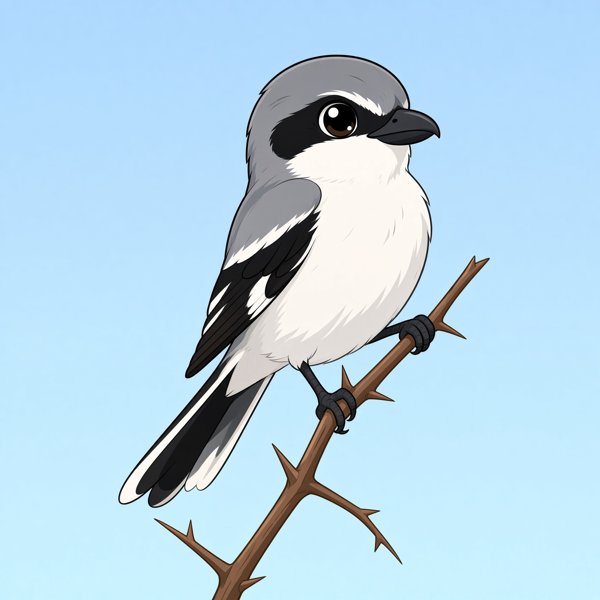
My name is Butch R. Bird, but my friends call me Shrike. Buckle your wing-belt. We're flying from the hay-field days to right now, with a peek at what's next.
Every stop on this flight comes from the project's records and the iNaturalist project. When we don't know something yet, I'll tell you. A shrike never fibs about a fencepost.
-
BeforeBefore the restoration Aerial view
A hay field of King Ranch bluestem
About 18 acres of pasture and hay field, dominated by King Ranch bluestem, an exotic grass. From up high it looked like one even, gray-green carpet. Down low there wasn't much variety, and not much to hunt.
-
2017
20182017 to 2018 Aerial viewJoining Pastures for Upland Birds, and planting day
The project joined Texas Parks & Wildlife's Pastures for Upland Birds (PUB) program, the first PUB project in McLennan County. PUB helps landowners turn exotic-grass pastures and hay fields back into native grasses and wildflowers.
On March 12, 2018, the field was drill-seeded with 19 native species from two mixes:
- Bamert Seed Co. PUB mix: big bluestem, little bluestem, Indiangrass, switchgrass, sideoats grama, Canada (prairie) wildrye, partridge pea, Illinois bundleflower, purple prairie clover, Engelmann daisy, Mexican hat, black-eyed Susan, Maximilian sunflower and common sunflower.
- Native American Seed wildflower blend: American basketflower, Indian blanket, lanceleaf coreopsis, golden-wave and lemon mint, plus more partridge pea, black-eyed Susan, Maximilian sunflower and purple prairie clover.
-
2018May 2018 on Close-up
The prairie starts keeping a diary
In May 2018 the Stokes Prairie Restoration Project started on iNaturalist. That first spring and summer, the seeded wildflowers showed up fast: golden-wave, Indian blanket (firewheel), partridge pea, Maximilian and common sunflowers, lemon mint, Illinois bundleflower and black-eyed Susan. Sideoats grama came up that summer too.
Visitors I noticed in 2018: a Wild Turkey on a game camera, green antelopehorn milkweed with large milkweed bugs clustered on it, a speckled kingsnake, a Texas ratsnake, a bobcat, and an Io moth caterpillar in October.
-
2019
2023The growing years Aerial + close-upsRoots down, life up
- 2019: about 100 Snow Geese flew over in January (show-offs). Indiangrass, one of the seeded tallgrasses, was logged in August.
- 2020: a Texas ironclad beetle (tough as its name) and a mud turtle.
- 2021: a Western Meadowlark, a grassland bird of exactly the kind PUB is meant to help (its ID is still being confirmed on iNaturalist). Big bluestem was logged in August, and false boneset in the fall.
- 2023: purple prairie clover and Mexican hat (both seeded) in May. And in December, a Texas Star fungus, Chorioactis geaster. It's the Texas state fungus, and it's known only from Texas and Japan. Stars in the prairie!
So far, 14 of the 19 seeded species have been confirmed on iNaturalist. Little bluestem, Engelmann daisy, prairie wildrye, switchgrass and American basketflower haven't been logged yet. They may just be waiting for someone with a camera.
-
20262026 Close-up
Chopping, pulling, and a suspicious mouse
Prairies don't stay prairies on their own. This year's big job is clearing a lot of encroaching cedar elm (Ulmus crassifolia). It's a native tree, and it drops its leaves in winter (it's not a juniper), but it moves into open prairie and shades out the grasses. We're also fighting invasive balloon vine and Johnsongrass, and keeping an eye on King Ranch bluestem and bastard cabbage.
Recent sightings: a copperhead in April (watch your step), and in the fall, snow-on-the-prairie, prairie false foxglove, bonesets, Texas pricklypear, and a honey bee on goldenrod.
Shrike saysOn September 12, 2026, someone found a headless mouse stuck on the barbed wire. That's classic Loggerhead Shrike pantry work. Not saying it was me... but it wasn't not me. (Officially: possible shrike sign, not confirmed.)
-
Oct
2026October 2026 Close-upA visitor with a clipboard
On October 7, 2026, our TPWD Biologist visited and did a sample survey. There are no results to report yet. I'll share them when they're in.
-
NextNext up (planned, not final) Aerial view
Fire, with an exit
Blackland Prairie grew up with fire, so fire is coming back. Here's what we're planning. It's still being discussed with TPWD:
- Patch burns: about a third of the acreage each year, over 3 years, so most of the prairie is always standing cover.
- Refuges and corridors left unburned, like the pond margin and fencelines.
- Burns lit so animals have an open side to escape.
- No burning from April to mid-July, during nesting season.
- A certified burn manager in charge.